
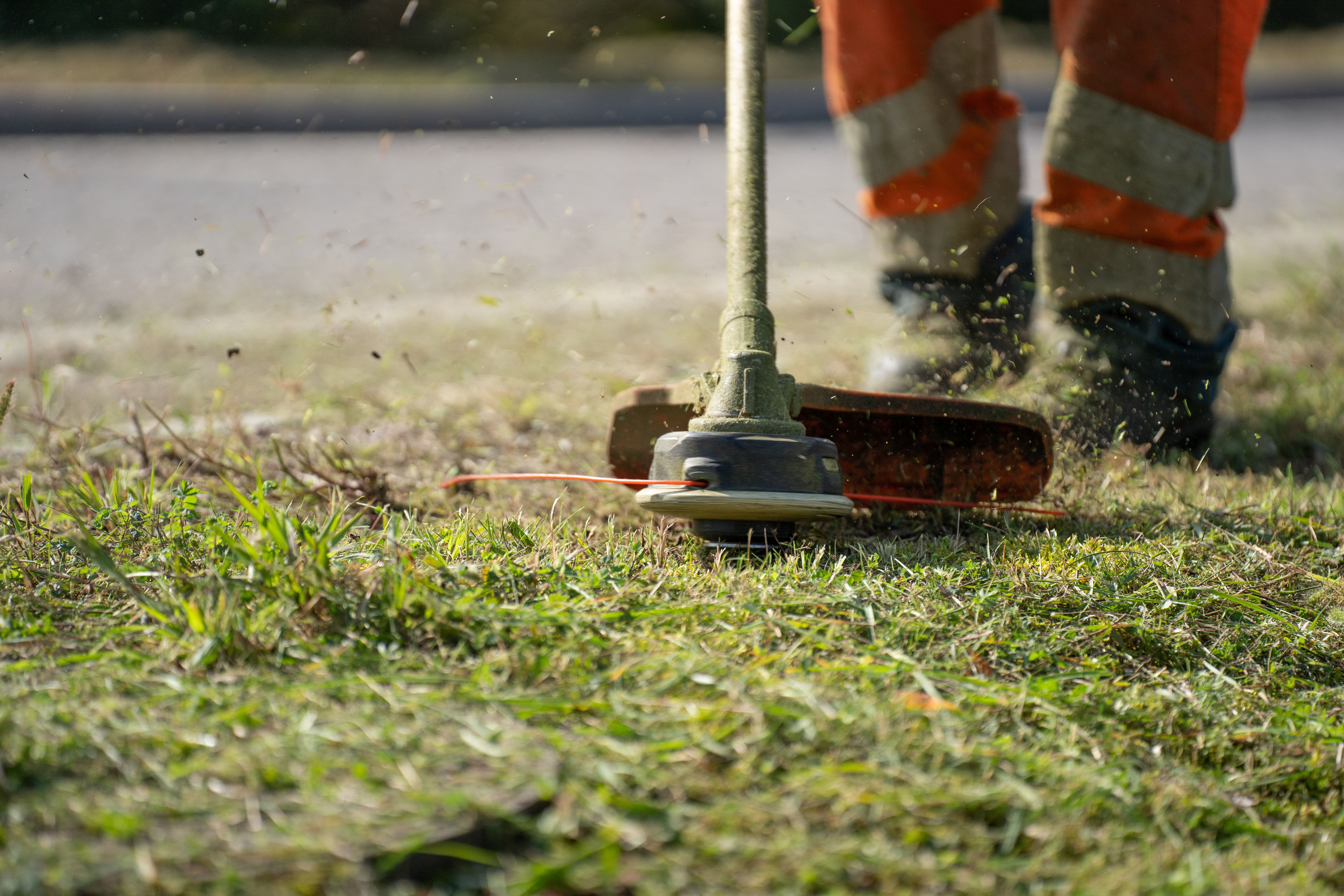
The difference between a lawn that is cut and a lawn that looks professionally maintained often starts at the edge.
The visual power of a boundary
Grass is soft and expansive by nature, while a sidewalk, driveway, or garden bed gives the eye a hard reference point. When grass grows across that boundary, the entire property can look untidy even if the center of the lawn is freshly mowed. A crisp edge restores the line and makes the space between surfaces feel intentional. It is a small detail with an outsized effect on curb appeal.
Edging also clarifies where equipment should travel. Defined bed lines reduce accidental scalping and help crews keep clippings out of mulch. Along walks and drives, a clean channel makes the hard surface easier to blow and sweep. The best result is neat without looking artificial: a line that follows the existing landscape rather than cutting into healthy turf.
Edging versus trimming
Trimming uses a string trimmer to cut grass around obstacles, fence posts, trees, and places a mower cannot reach. Edging creates a more defined vertical line along a hard surface or bed boundary. Both tasks belong in a complete visit, but they solve different problems. Trimming blends the cut; edging frames it. Skipping either one leaves visible unfinished areas around an otherwise well-maintained lawn.
The timing depends on growth and the material at the boundary. Edging too aggressively can expose soil or damage pavement, while waiting too long allows runners to reclaim the line. A steady maintenance schedule is safer than a dramatic correction. Crews should also account for buried utilities, irrigation, and the structure of tree roots before making a new cut.
Keep the line healthy
A sharp edge does not require removing a wide strip of grass. The goal is to create separation while leaving enough root zone to support recovery. Water should still be able to reach the soil, and mulch should not be pushed into a channel where it can wash onto the sidewalk. After edging, blowing the surface clean is part of the finish rather than an optional extra.
For homeowners, the easiest way to preserve a professional edge is to avoid mowing over it and to address weeds before they seed. For a lawn care provider, documenting the route and repeating the same lines keeps the look consistent from visit to visit. Precision is a maintenance habit, not a one-time trick.