
Reset winter-weary turf, beds, and walkways with a practical cleanup sequence that starts the season right.
Start with an honest inspection
Spring cleanup works best when it begins with a walk around the property rather than a mower. Look for branches, stones, toys, winter salt residue, and areas where leaves collected against fences or foundations. Mark soft ground before bringing equipment across it. Ohio soil can stay saturated well after the first warm afternoon, and driving or repeatedly walking through wet areas can compact the soil and create ruts before the grass has started growing.
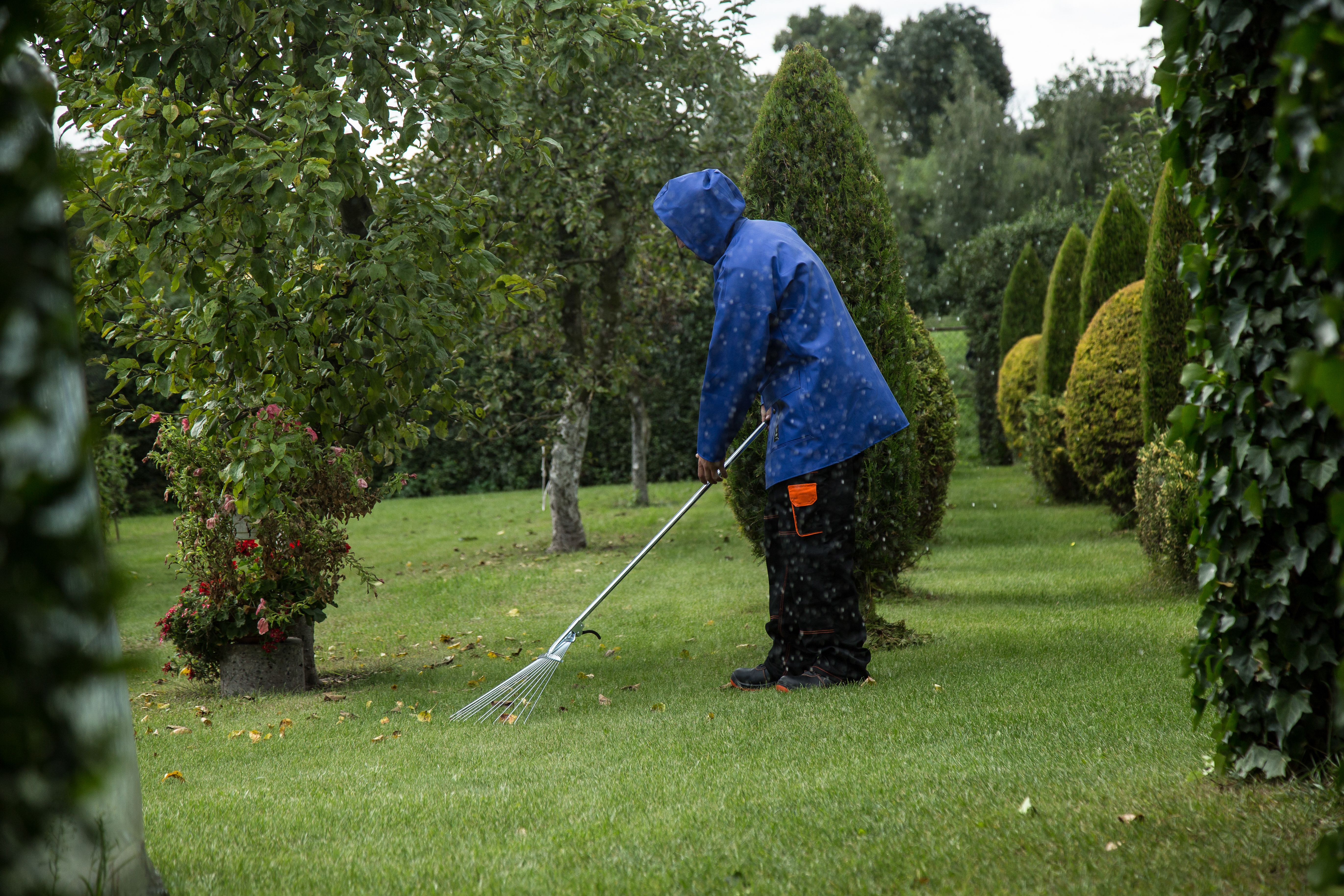
Check the turf for matted leaves, snow mold, bare patches, and winter damage. Gently rake only where debris is thick; aggressive raking can pull up crowns that are still recovering. Beds often need a separate pass for dead stems, fallen branches, and windblown litter. Leaving a thin layer of natural leaf material can be helpful, but dense mats block light and air from reaching new growth.
Clean beds and hard surfaces
Cut back dead perennial growth when you can see new shoots at the base, leaving living stems alone. Pull obvious weeds while the soil is workable and redefine bed edges so mulch has a clean boundary. Do not pile heavy material against tree trunks or the siding of the house. A clean edge helps water move where it belongs and makes every later mowing visit easier.
Finish by blowing or sweeping walks, patios, and driveways. Winter grit can damage turf when it is dragged into the lawn, while leftover leaves can stain concrete and feed weeds in cracks. If the property has a drainage problem, spring is the right time to note it before the season becomes busy. Cleanup is not only about appearance; it is an early inspection of how the property handled winter.
Move into a maintenance rhythm
Once the property is clear, wait for the grass to dry and begin mowing at a conservative height. Avoid forcing the first cut when the turf is flattened or soft. Sharpen mower blades, check trimmer line, and make sure the discharge pattern spreads clippings evenly. A clean start reduces the amount of correction needed later in the season.
Many homeowners pair a spring cleanup with a weekly or biweekly maintenance plan. That approach turns a large seasonal reset into a series of manageable visits. The crew can monitor growth, communicate weather delays, and address small issues before they become expensive repairs. A written route and a consistent visit day are especially useful when the lawn is expected to look ready for outdoor gatherings throughout the summer.