
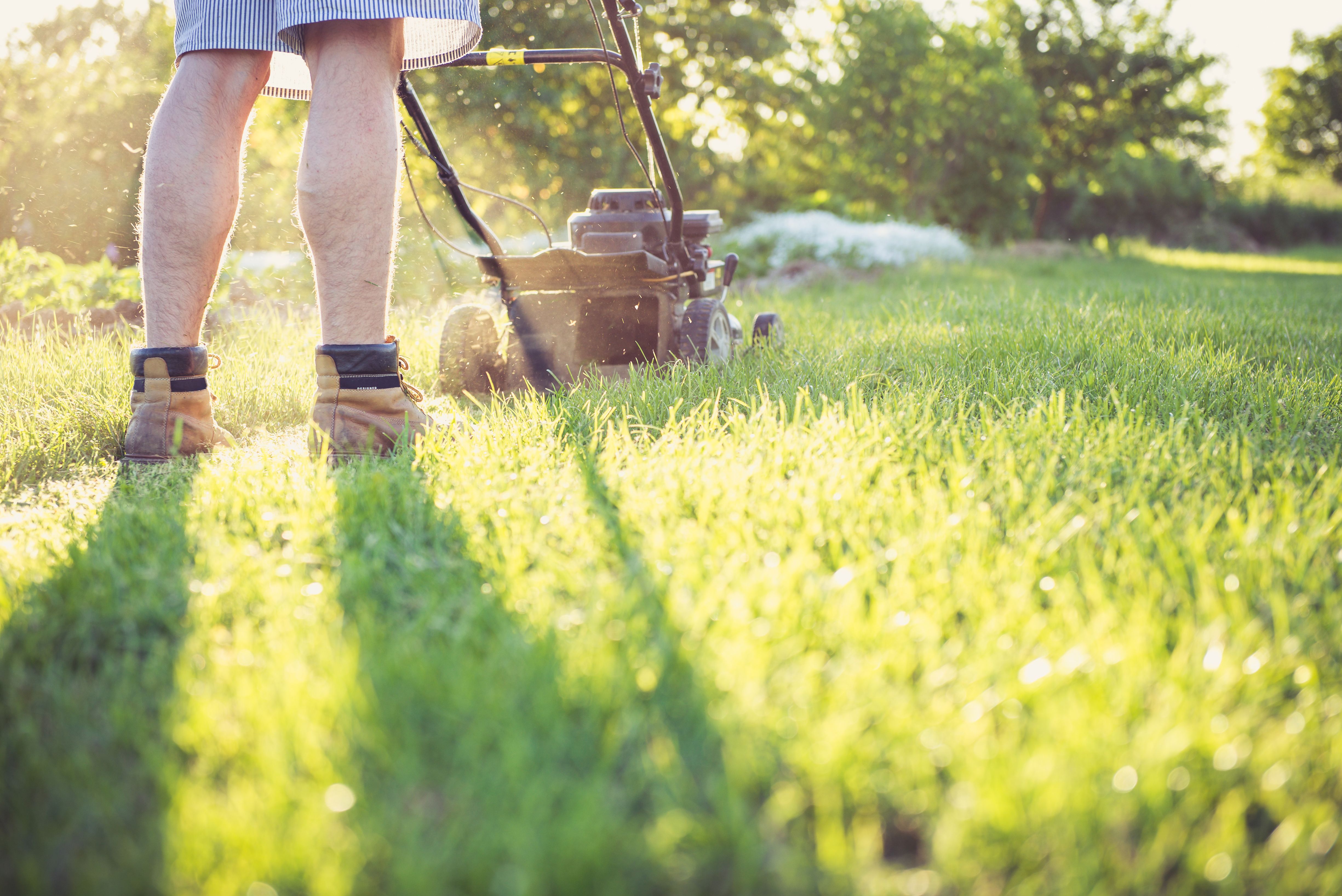
Stripe patterns are more than decoration: they show how cut direction, blade care, and turf health work together.
Stripes come from light direction
The familiar light and dark pattern is created when mower rollers or tires bend grass blades in opposite directions. Blades leaning toward you reflect light differently from blades leaning away. The effect is strongest on healthy, upright turf and softer on rough or drought-stressed grass. Striping should enhance a good cut, not hide uneven height or missed areas.
A simple back-and-forth pattern is the safest place to begin. Keep each pass aligned with the previous one and overlap slightly so narrow slivers do not remain between runs. After several visits, change the direction or use a cross pattern. Repeating one route every time can compact tracks and encourage the grass to lean permanently.
The cut underneath matters
Sharp blades create a clean wound that recovers more easily than a torn blade. Set the deck to the correct seasonal height and avoid removing more than one-third of the leaf. A dramatic stripe on scalped turf is not a sign of healthy maintenance. The strongest finish combines an appropriate height, even speed, and a blade that is serviced regularly.
Moisture changes the result. Wet grass can clump, smear across the surface, and resist an even bend. Mowing when the lawn is dry enough to stand upright produces a cleaner pattern and protects the soil from ruts. Obstacles should be approached with a plan so turns do not leave circles or gouges near beds and trees.
Finish every pass
Striping is only one part of the visual finish. Trim around posts and beds, edge the hard surfaces that need definition, and blow clippings from walks and drives. A lawn with beautiful lines but clippings scattered across the entrance still feels incomplete. Professional crews treat the transition from turf to every surrounding surface as part of the same job.
Homeowners can practice patterns on a small section, but large properties benefit from an established route. Consistent pass direction, predictable visit timing, and seasonal height adjustments keep the result sharp without stressing the grass. The goal is not a single impressive photograph; it is a property that looks cared for every week.